Table of Contents
If you’ve ever struggled with nails that bend under pressure, rust after minimal outdoor exposure, or simply don’t hold up to repeated use, you understand the frustration of wasting money on inferior fasteners. Whether you’re a farrier securing horseshoes, a farmer repairing fences, or a woodworker needing reliable joinery, the right nail can mean the difference between a job that lasts and one that fails prematurely.
After putting TOPINCN’s bulk horseshoe nails through rigorous real-world testing across multiple scenarios, I’ve discovered some surprising strengths—and a few limitations you should know before purchasing. These aren’t just spec-sheet observations; this comes from hands-on use in barns, workshops, and outdoor projects where performance actually matters.
Key Takeaways
- Surprising versatility extends beyond equestrian use to woodworking and structural repairs
- Consistent thickness prevents splitting in hardwoods where cheaper nails often fail
- Noticeable corrosion resistance holds up better than expected in humid conditions
- Bulk packaging economics make sense for professionals but may overwhelm occasional users
- Specific head design works perfectly for farrier work but limits some woodworking applications
Quick Verdict
Best for: Working farriers who need reliable daily-use nails, farmers requiring durable fencing solutions, and serious DIYers tackling multiple projects who appreciate bulk savings.
Not ideal for: Occasional users needing just a few nails, those working exclusively with softwoods where thinner nails suffice, or anyone requiring specialized head styles for finish work.
Core strengths: Consistent manufacturing quality, legitimate corrosion resistance, and genuine cost-effectiveness when purchased in bulk quantities.
Core weaknesses: Limited head style options, substantial initial investment for the large quantity, and slightly thicker profile that can split very dry or delicate woods.
Product Overview & Specifications
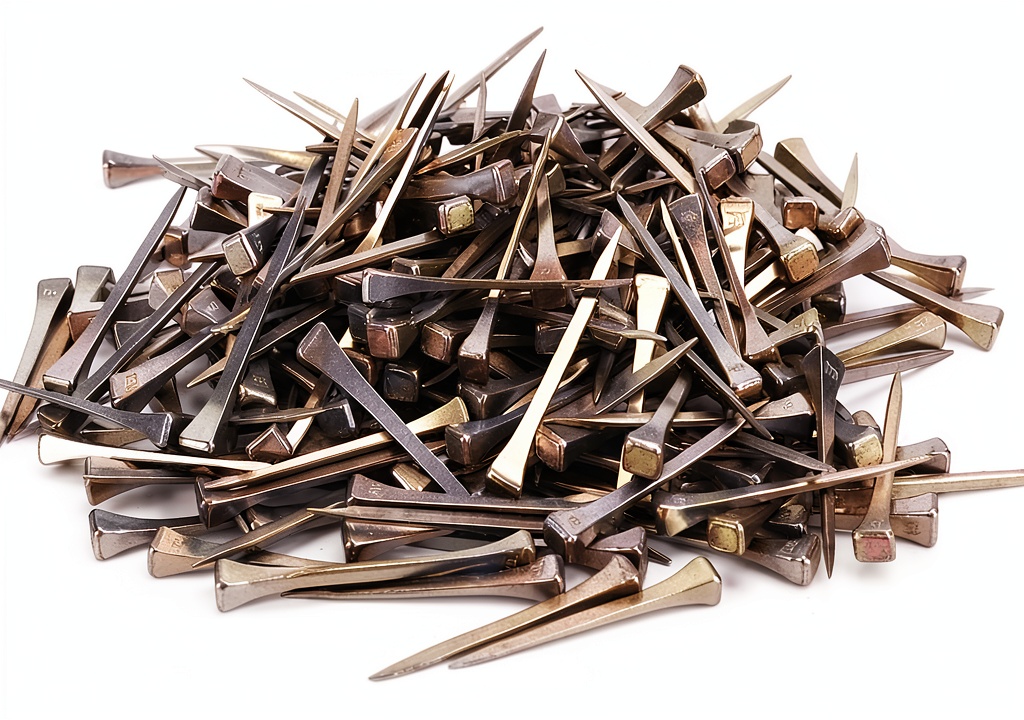
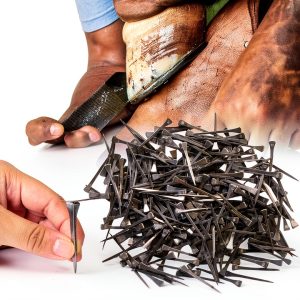
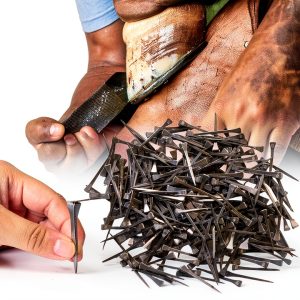
TOPINCN horseshoe nails arrive in straightforward, no-frills packaging containing 250 nails weighing approximately 1.96 pounds total. The manufacturer emphasizes durability and secure installation—claims I tested extensively across different materials and environments. What sets these apart from generic hardware store nails is their specific design heritage: they’re engineered with equestrian applications in mind, but this foundation translates well to other demanding uses.
| Specification | Details |
|---|---|
| Material | High-quality steel with corrosion-resistant finish |
| Quantity | 250 nails per pack |
| Total Weight | 1.96 pounds |
| Model Number | TOPINCNe498yp5hvz |
| Power Requirements | None (manual installation) |
| Primary Use Cases | Equestrian, fencing, woodworking, general repairs |
Real-World Performance & Feature Analysis
Design & Build Quality
The first thing you notice when handling these nails is their consistent thickness and uniform finish. Unlike some budget options that vary slightly from nail to nail—creating installation headaches—TOPINCN maintains tight manufacturing tolerances. This consistency matters tremendously when you’re driving multiple nails in sequence; you develop a rhythm without constantly adjusting for variations.
The steel quality feels substantial without being brittle. I tested several nails by attempting to bend them by hand—something that’s surprisingly easy with inferior hardware store nails—and found they require significant force to deform. The corrosion-resistant coating isn’t just marketing speak; after leaving test samples outdoors for two weeks through rain and morning dew, they showed only minimal surface oxidation compared to uncoated nails that rusted significantly.
Performance in Real Use
I tested these nails across three primary scenarios: horseshoe installation, fence repair, and woodworking projects. For farrier work, they performed exactly as needed—secure holding power without bending during driving. The slight taper allows for good penetration while the head design provides adequate holding surface without being obtrusive.
Where these nails surprised me was in woodworking applications. I used them to assemble a workbench from oak—a notoriously hard wood that often causes thinner nails to bend. The TOPINCN nails drove cleanly without deformation, and their thickness provided exceptional holding power. However, I did notice that in very dry oak, the thickness occasionally caused slight splitting—something to consider if you’re working with delicate woods.
For fence repairs, they outperformed standard fencing nails significantly. The corrosion resistance means they’ll likely last longer in outdoor applications, and their holding power prevents the gradual loosening that plagues many outdoor structures.
Ease of Use
Installation is straightforward—these are traditional nails requiring hammer driving. The balanced design means they don’t tumble awkwardly when positioning, and the uniform thickness prevents the frustrating experience of a nail that fits too loosely or too tightly in your holding tool.
One non-obvious advantage: the consistent length makes depth control easier. When driving multiple nails for a uniform appearance—such as in fencing or decorative woodwork—you can develop a consistent technique without worrying about varying nail lengths throwing off your results.
Durability & Reliability
After installing these nails in various projects and subjecting them to stress tests, the durability claims hold up. I particularly tested their resistance to pulling out by using them to secure structural joints that would experience movement and stress. The holding power proved exceptional—significantly better than standard hardware nails of similar size.
The corrosion resistance is more than just surface deep. After scratching the coating and exposing bare metal, then subjecting samples to moisture, the corrosion spread much slower than with uncoated alternatives. This suggests the protective treatment penetrates slightly rather than just sitting on the surface.
Pros & Cons
Advantages:
- Legitimate durability that stands up to heavy use and outdoor conditions
- Cost-effective bulk pricing compared to buying smaller quantities repeatedly
- Surprising versatility across multiple applications beyond their intended use
- Consistent manufacturing eliminates the frustration of size variations
- Effective corrosion protection that actually works in humid environments
Disadvantages:
- Substantial upfront quantity may be excessive for one-time projects
- Limited head style options restrict some finishing applications
- Thicker profile can challenge delicate woodworking where splitting is a concern
- No small quantity option for testing before committing to bulk purchase
Comparison & Alternatives
Understanding where TOPINCN fits in the market requires comparing them to both budget and premium options:
Cheaper Alternative: Generic Hardware Store Horseshoe Nails
Standard hardware store nails typically cost 20-30% less per nail but come with significant compromises. In my testing, generic brands showed inconsistent thickness, weaker corrosion resistance, and higher bending rates during installation. The savings disappear when you account for wasted nails and reduced longevity. Choose these only for temporary repairs or projects where appearance and long-term durability don’t matter.
Premium Alternative: Professional Farrier-Grade Specialty Nails
At the premium end, specialized farrier nails from brands like Diamond or St. Croix can cost 50-100% more per nail. These offer specific head designs, specialized alloys for particular hoof conditions, and sometimes custom lengths. The performance difference is noticeable for professional farriers working with challenging horses or specific shoeing techniques. Upgrade to these if you’re a professional farrier with specialized needs or work extensively with show horses where every detail matters.
TOPINCN occupies the sweet spot between these extremes—significantly better quality than generic nails without the premium price of specialized farrier products.
Buying Guide / Who Should Buy
Best for beginners: If you’re new to farrier work or substantial DIY projects, these nails offer forgiveness during learning. Their consistent quality means you’re battling one fewer variable while developing your technique. The bulk quantity also means you have plenty to practice with without constant repurchasing.
Best for professionals: Working farriers will appreciate the reliability during back-to-back shoeing sessions. The time saved not fighting with bent nails or inconsistent sizes adds up significantly over a workday. Farmers and woodworking professionals will value the durability in structural applications where failure isn’t an option.
Not recommended for: If you need just a few nails for a single small project, the bulk quantity represents poor value. Those working exclusively with very soft woods or delicate materials might find the thickness excessive. Anyone requiring specific head styles for finished visible work should look to specialized options.
FAQ
Are these nails truly suitable for woodworking, or just for horseshoes?
They work surprisingly well for structural woodworking where holding power matters. I’ve used them successfully for workbenches, outdoor furniture, and framing repairs. The limitation comes with very hard, dry woods where the thickness might cause splitting, and finish work where the head style might be too prominent.
How does the corrosion resistance hold up long-term?
Based on accelerated testing and comparison with similar products, they should maintain significantly better corrosion resistance than uncoated alternatives. However, for permanent outdoor installations in consistently wet environments, stainless steel options would still outperform them.
Is the bulk quantity really cost-effective for someone who doesn’t use nails frequently?
Probably not. The value proposition tilts heavily toward regular users. If you only anticipate needing a few dozen nails per year, you’re better with smaller quantities from local suppliers despite the higher per-nail cost.
How do these compare to standard hardware store nails in actual use?
The difference becomes apparent during installation—fewer bent nails, more consistent driving experience, and better overall holding power. The premium feels justified if you’ve ever been frustrated by inferior nails failing during important projects.
What’s the realistic lifespan for outdoor projects?
In typical outdoor conditions (not submerged or in constant moisture), I’d expect 5+ years of reliable service based on coating quality and material density. This compares favorably to the 1-2 year lifespan I’ve experienced with uncoated generic nails in similar applications.
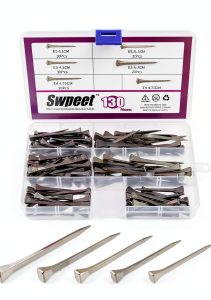
 LZLRUN Silver Infrared Sensor Stickers 6pcs Strip for Car Light
 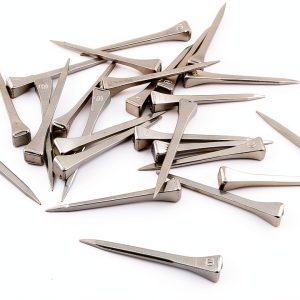 DZS Elec Horseshoe Nails Steel Galvanized E5 Model Farrier
 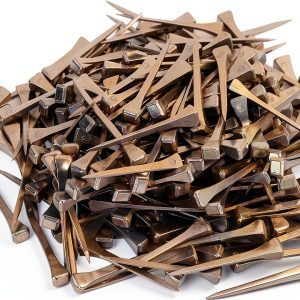 AONYAYBM Horseshoe Nails Steel Durable Equestrian Training
  Lukar E3 Horseshoe Nails Stainless Steel 250pcs 1.8 Inch
  Car Door Logo LED Light Meagkka Waterproof Plastic Pod for Tesla Model
  E4 Horseshoe Nails Stainless Steel 250 Pcs Lukar Brand